Faith Can Move Mountains... But Dynamite Works Better
Showing posts with label Paul Rudd. Show all posts

Wednesday, July 11, 2018

Small Heroes And Big Stakes


“Nothing can prepare you for what’s coming.” ~ Ava

“Hiya, champ, how was school today?” ~ Hank Pym

“Thanks to you, we had to run. We’re still running.” ~ Hope Van Dyne

“I do some dumb things, and the people I love the most- they pay the price.” ~ Scott Lang


In 2015, Ant-Man gave the Marvel cinematic universe a different perspective, bringing in characters established in the comics and creating new ones in what was a light hearted sort of heist film. Now director Peyton Reed returns with the lead actors and a formidable new antagonist to another chapter in the small sized hero element of the Marvel world in Ant-Man & The Wasp, set in between Captain America: Civil War and the more recent Avengers Infinity War.


The film picks up threads from the previous film, with the disappearance of Janet Van Dyne (Michelle Pfeiffer) into the microscopic quantum realm while on a mission. Former criminal Scott Lang (Paul Rudd), as Ant-Man had entered and returned from that realm, giving hope to Janet’s husband Hank Pym (Michael Douglas) and daughter Hope (Evangeline Lilly) that it might be possible to find and save Janet. Scott’s participation in the superhuman dust-up that was part of Civil War leads to a parting of the ways, as Scott ends up on house arrest and Hank and Hope go into hiding. Two years later, Scott’s nearly finished his parole term after receiving a cryptic message from the quantum realm, and fate draws him back into the orbit of Hank and Hope, all while other players play into unfolding events.


With the success of the original film, of course there was going to be a sequel. Leading man Rudd is credited as one of the writers, along with four others, usually a sign of trouble when it’s writing by committee, though that’s not the case here. Chris McKenna, Erik Sommers, Andrew Barrer, and Gabriel Ferrari are also credited, and the script that results builds on what’s come before and takes things in new directions. That includes the light hearted humour and earnest charm of Rudd, the family dynamics moving into new directions for the Pym-Van Dyne clan (from estrangement in the first film to a common purpose), and the fantastic elements of microscopic worlds that the premise opens up.


Where the first film was more of a heist and caper film, this blends in part action, part romantic comedy, and for good measure throws in a complex villain who turns out to be a real treat in the way she’s treated. The writing for the characters is what grounds the film, playing to the strengths of the actors and to where they’ve already come from, giving depth and nuance in each case. Most of those are already established characters, while introducing new ones who are familiar to comic readers. The film's stakes aren't as big, perhaps, as that of Infinite War, with its despotic antagonist, but more personal, a rescue mission to save a life, and perhaps more than one life.


Reed’s return to the director’s chair for this second installment brings back the same techniques of the first film. He proved in the first case that he could balance the work of actors on the one hand and the CGI and action on the other, and that continues here. Where the characters are the bedrock of the film, Reed’s work continues to succeed in making use of CGI where it’s needed, and pacing action sequences in a way you can follow. Concepts like rapid shrinking or growth, as well as a character who phases in and out of physical touch, are made use of in the right way.


The cast, both returning and new players, are welcome in their roles. Michael Pena, David Dastmalchian, and Tip “T.I.” Harris return from the first film as Luis, Kurt, and Dave, each of them Scott’s old criminal associates who have gone legitimate, and the characters are part comic relief, part indispensable and unlikely backup in a crunch. Pena’s Luis is a particular motor-mouth who never seems to know when to shut up, which is part of the fun of the character, but Luis is also a strongly loyal sort. Randall Park debuts in the role of FBI agent Jimmy Woo, a fixture in the comics for some time now; he’s given a different role as a fed overseeing Scott’s house arrest, and gives the character a suspicious wariness.


Walton Goggins has made a career of playing dirtbags, most recently in Tomb Raider, and the same applies here as he plays Sonny Burch, also a character drawn out of the comics, where he was a minor villain in the Iron Man books. The character certainly fills the sleazebag role, a dirty dealing black market criminal with more ambition than brains, sniffing around at an opportunity and not considering that he might be in over his head. The character isn’t remotely likable or sympathetic, but the actor certainly plays to that and seems to be having a ball, chewing the scenery as he goes along.


Laurence Fishburne debuts in the Marvel universe (having had played Daily Planet chief Perry White in two of the recent Superman films for DC) as Bill Foster, another figure from the comics. Here Foster is an old associate of Hank Pym, though the two have had a parting of the ways some years earlier and aren’t on the best of terms. Fishburne has the acting chops to go toe to toe with Douglas on a matter of ethical concerns, and that comes across in the film, but he also plays Foster as a man of great intelligence and fortitude, doing something that he feels is the right cause.


Hannah John-Kamen plays the primary antagonist of the film, a young woman with a distinct problem. Ava is her real name, and she has ties to other players in the story as the Ghost. She is a mystery when we first meet her, phasing in and out of reality, her condition unstable at the quantum level. For her, Pym’s technology may be the key to saving her life, so her actions are entirely understandable, and it also makes her sympathetic. Ghost is a longstanding character in the Marvel universe, something of a mix between villain and anti-hero, and the character has been gender-switched here from a man into a woman, but it’s not jarring at all- if anyone could be switched like that, it’s Ghost, whose real name in the comics has never been divulged. The look of the character fits with the comics generally, and the presence- the line between villain and anti-hero- the actress gives her makes her a compelling one, and I’d like to see more of her down the line.


Michelle Pfeiffer also debuts as Janet Van Dyne, the original Wasp from the comics, and from movie continuity, taking over the role that was seen briefly in the first film. She’s not around for a whole lot of the film, generally confined to the second half, but she brings the right touch to Janet- the strong survivor who’s somehow made it through decades of being shrunk down in the microverse (where’s the food down there?), the wife and mother who’s missed her family, and the hero who’s willing to help someone who might not deserve that help. Her take on the character is sympathetic and a welcome addition to the Marvel cinematic universe.


Michael Douglas returns as Hank Pym again, the original Ant-Man who’s spent years trying to make things right. In the first film he reconciled his differences with his daughter, and this time out it’s about finding a way to determine what’s become of his wife. Pym starts out in one place- justifiably irritated with Scott because of Scott’s involvement in the superhuman dispute that’s put his own work in jeopardy. As the film unfolds, the character has to set aside those differences for a greater good, and Douglas gives the character the right tone of exasperated and wary scientist on the one hand and a paternal quality on the other. With the latter, it’s pride in his daughter and a more reluctant pride where Scott’s concerned. Pym might be cranky (and even a bit of a jerk), but there’s a sort of father-son dynamic with Scott, and Douglas plays to that.


Having had teased the notion of Hope Van Dyne as the Wasp in the previous film, this time out the story puts her right in that role, and Hope’s look fits the character. Evangeline Lilly reprises her role as Hope, a new creation for the cinematic universe the first time out (though the comics do now feature a teenaged daughter for Pym named Nadia, created mostly because of the previous film). Where the first film had Hope estranged from her father and reluctant to work with a scoundrel ex-con like Scott, this film finds her at a better place with Hank, and trying to sort out differences with Scott over his decisions (she starts out justifiably angry with him). There’s a playful, romantic spark between Hope and Scott that the actors play off of, but the actress invests her character with strength, resolve, and a fearlessness that makes her come into her own.


Paul Rudd brings back his laconic charm as Scott Lang, the former convict who’s been hard at work trying to better his life. The first film brought him full circle in that respect (with a rather impulsive decision during Captain America Civil War leading to him messing up his life, even if it was with good intentions). We find him still making the effort to do right, even if it’s under house arrest and the only thing he can do right is to be a good father to his daughter Cassie. The film takes him beyond that, requiring him to put his legal status in peril for a greater good; his concern about being a responsible parent happens to also be the same personal quality that makes him want to do right by Pym and Hope. Scott is something of a regular person (which is how Rudd plays him), but he’s the sort who can rise to the occasion when needed, and proves to be resourceful and capable in and of himself.


Ant-Man & The Wasp continues the Marvel cinematic universe in the right way, investing itself in its characters, playing off a lighter tone but still with some dramatic weight. It’s self-contained and yet linked to the greater Marvel universe (as the credits sequences will show), and it’s fun and well-paced. The leading actors have the right degree of chemistry, and their antagonist is a welcome new addition to the Marvel universe, one who manages to elicit our sympathy just enough.

Wednesday, May 11, 2016

Just A Wee Bit Of A Disagreement


“We may not be perfect, but the safest hands are our own.” ~ Captain America

“We need to be put in check. Whatever form that takes, I’m game.” ~ Tony Stark

“Captain, while a great many people see you as a hero, there are some who prefer the word vigilante. You’ve operated with unlimited power and no supervision. That’s something the world can no longer tolerate.” ~ Thaddeus Ross

“Look, man, I know you know a lot of super people, so... thanks for thinking of me.” ~ Ant-Man

“If you do this, they will never stop being afraid of you.” ~ Vision 
“I can’t control their fear, only my own.” ~ Scarlet Witch

 “Are we still friends?” ~ Black Widow 
“That depends on how hard you punch me.” ~ Hawkeye

“I’m trying to prevent you from tearing the Avengers apart.” ~ Iron Man 
“You did that when you signed.” ~ Captain America


Marvel Studios continues its run of comic book adaptations with Captain America: Civil War, which could easily be titled Avengers: Civil War, since almost all of the team turn up through the film. The film brings back brother directors Anthony and Joe Russo, who helmed the previous Captain America: The Winter Soldier, as well as previous cast members, all while introducing some key new characters. Along the way, the story ties closely to the previously established continuity of the Avengers world, and ends up pitting heroes against each other... all while a villain pulls strings from behind the scenes.


The film opens years in the past, with the brainwashed Bucky Barnes (Sebastian Stan), otherwise known as the Winter Soldier, dispatched by Hydra on an assassination mission. In the present day, months after the Avengers defeated Ultron, Captain America (Chris Evans) and some of his fellow Avengers work to bring down a familiar adversary, though there are casualties along the way. The team are informed that the UN wants oversight on the team; the news is delivered by the Secretary of State, Thaddeus Ross (William Hurt, reprising his military officer role which he last played in The Incredible Hulk).


The issue has the team seeing things differently. Tony Stark (Robert Downey Jr.), who’s been feeling guilty about creating Ultron in the first place and the destruction caused by it, supports the initiative. Steve Rogers has more faith in himself than in government agencies. One can see the validity of both arguments, but the dilemma has the team becoming fractured, particularly after the assassination of an esteemed African king at the hands of the Winter Soldier.


The screenplay is by Christopher Markus and Stephen McFeely, who wrote the two previous Captain America films, as well as Thor: The Dark World, and the Chronicles Of Narnia series. The story really comes across as a continuation of where things left off with The Winter Soldier, while also playing off the events of Avengers Age Of Ultron. It takes elements from a comics big event called Civil War, which threw the idea of superhuman registration into the mix. One character created for that event is reprised here, the notion of regulation is explored, and two opposing viewpoints expressed most strongly by Cap and Iron Man are clearly designated. That said, the film takes those plot points and goes off in a different and much better direction (the original limited series, written by a hack of a writer named Mark Millar, can be avoided).


Rather than an epic war torn film, the script plays like a psychological thriller, with hints of the Western here and there- with clearly drawn lines and little shades of grey. It’s hard to pick sides between the schism that forms up in the Avengers, but it’s easy to understand both points of view, and that comes across through the script. The story plays around with themes of personal and public responsibility, the loyalties of friendships, and political intrigue. And while it deals with heroes finding themselves on opposing sides of an ethical dilemma, the script does allow for villainy to rear its head, giving us an adversary who’s drawn differently from his Marvel origins, and yet is just as devious. Markus and McFeely’s script even brings in some humour, while maintaining the established characterization in what turns out to be a very large cast.


The Russos did exceedingly well with The Winter Soldier, and so it makes perfect sense to bring them back to direct this film. They’ve already shown that they have a good take on action, something that’s pretty much essential in a Marvel adaptation, but they also have the right touch in letting characters shine, which happens throughout- a difficult task when one is dealing with such a sizeable cast. The film was shot in various spots around the world, suitable since the story features globe-trotting locations, both real and Marvel-created; the use of a German airport- strangely not that busy- features heavily in the film, for instance. And I really liked the look of the fictional African kingdom of Wakanda.


While many of the characters through the film are previously established in other films in terms of costume design and other such details, three new characters key to the film show up, and I like the way the production crew gave their looks. Spider-Man (Tom Holland) makes his debut in the Marvel cinematic universe (thanks to a deal with Sony, who have apparently gotten tired of rebooting the character), and the character’s look is very much in the tradition of the comics. 


Black Panther (Chadwick Boseman) also makes his debut, and I really liked the sleek, high tech look of the character’s uniform, fitting with his African origins and totally badass. Helmut Zemo (Daniel Bruhl), a villain from the comics, on the other hand, does not have any of his traditional look- no mask, but the character’s look fits what the story has in store for him. In addition, the Russos brought back Henry Jackman to compose the score- he did the tense, slightly nihilistic score for The Winter Soldier- Jackman’s score expands on where he started from and moves in new directions.


The cast is a big one, but everyone feels cohesive to the purposes of the story. Martin Freeman (Sherlock, The Hobbit) turns up as an American government official, Everett Ross, tied to the Panther in the comics, somewhat ambiguous in terms of his world view. Marisa Tomei turns up as Peter’s aunt May Parker- still too young, but filling the maternal worrying aspect of the character. Alfre Woodard appears as Miriam Sharpe, a character from the comics, fulfilling the same role as she did in the Civil War limited series- making Tony Stark feel profoundly guilty, while not being nearly as obnoxious as her comics counterpart. William Hurt reprises his role as Thaddeus “Thunderbolt” Ross, who’s moved on from his military days spent hunting the Hulk to politics; he’s still as dismissive of heroes as ever, still comes across as a man bearing a permanent grudge.


John Kani was a surprise appearance as T’Chaka, the ill fated king of Wakanda; I really liked his work in The Ghost And The Darkness, and his appearance here was welcome. Emily VanCamp reprises her role from The Winter Soldier as Sharon Carter, the former S.H.I.E.L.D. agent who’s moved over to the CIA. Sharon has history with Cap, and the two characters have a common world view and good chemistry. Frank Grillo also returns from The Winter Soldier as the ex-S.H.I.E.L.D. agent and Hydra loyalist Brock Lumlow, aka Crossbones, still imposing as ever (the look the production crew give him here suits him), and still bearing a serious grudge, which certainly comes across in how Grillo plays him.


Daniel Bruhl, who I last saw in Rush (opposite Chris Hemsworth- with the absence of Thor in this film, there’s a missed chance to have a double-take between the actors) plays Helmut Zemo, the villain of the film. He’s a man of facades, a military officer turned terrorist from Sokovia, the country devastated by the events of Age Of Ultron, and obsessed with revenge against the Avengers for the destruction in his country. It makes his motives understandable, at least- he’s lost loved ones and blames it on the heroes. Zemo’s quite different from his comics counterpart, in terms of background and his look, but the character in the film is devious, clever, and knows how to pull strings. Bruhl certainly plays to that, giving Zemo a ruthless, manipulative touch that fits into the Marvel universe very well indeed. He’s a bastard, but a relatable one, and he ends up making a compelling villain.


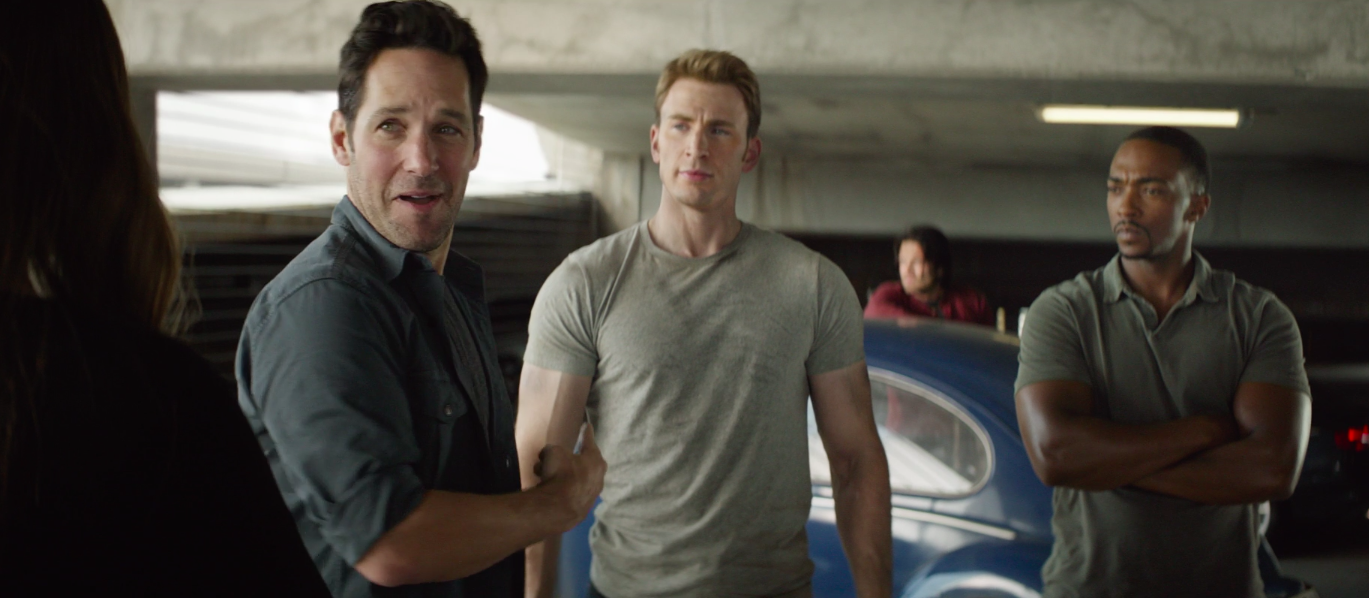
Paul Rudd reprises his role as Scott Lang after last year’s Ant-Man. The character is recruited into Cap’s faction, and Rudd provides some of the humour of the film, particularly in how he meets Cap for the first time. Some of the other humour comes from Tom Holland, debuting as Spidey; the character’s young, but already powered when we meet him (wisely the story doesn’t need to rehash the Spider-Man origin yet again). Holland gives the character the right degree of snark (he never seems to shut up), while the character takes part less out of any real principle than out of the personal relationship he has with Tony Stark- something of a mentor and student dynamic.


Chadwick Boseman is new to the Marvel universe as T’Challa, the young African prince turned king also known as the Black Panther, a royal title as much as anything else. The actor previously appeared as Jackie Robinson in 42, so I was looking forward to what he would do with this character, and he fits T’Challa perfectly. For the story, the character is a third voice, a different point of view from Steve and Cap, and his motivations are very personal in where he stands. T’Challa is royalty, coming to inherit his father’s throne in a way he would have never wanted, and I like the way the story features him trying to find balance between tradition and the modern world. The Panther comes across as the brilliant but mysterious man I would have expected from his best comics appearances- when the solo film comes along, the writers would be wise to follow the comics works of Christopher Priest, whose writing style really paid off for the character.


Paul Bettany’s been involved in the Marvel cinematic universe from the beginning, giving voice to Tony Stark’s AI program JARVIS through the Iron Man and Avengers films until taking on the role of the android Vision in Age of Ultron. He plays the character with a combination of logical and naive, a curious being searching for the meaning of humanity. Elizabeth Olsen reprises her role as Wanda Maximoff, the Scarlet Witch, having had debuted in Age of Ultron as the character. Wanda is somewhat conflicted, having had lost her brother in battle, and there’s some interesting chemistry between her and the Vision, while the position she ultimately chooses is entirely understandable.


Don Cheadle returns as James Rhodes, the military officer and best friend of Tony Stark who uses the War Machine armor. He’s been playing the character in two of the Iron Man films and Age of Ultron, still the hot shot pilot who puts up with Tony for some odd reason- and Cheadle continues to make him a more compelling character than the actor who originated him in the first Iron Man film (thank Odin for recasts). Anthony Mackie also returns as Sam Wilson, the Falcon, whose choice to join Steve’s side in the dispute is never in doubt- the two have been working awhile as partners, and there’s a lot of mutual respect between them.


Jeremy Renner reprises his role as Hawkeye; the character’s settled into a quiet life with his family. Yet he comes back and takes Steve’s side in the dispute- while finding himself on the opposite side from his oldest friend. Part of that seems to be out of an obligation to Wanda, whose brother saved his life by sacrificing his own. Scarlett Johansson returns as the Black Widow, and she’s as enigmatic as ever playing the character. She’s conflicted between the two sides over the issue of oversight, and I like that she sees both sides of the issue and that she’s even a voice of reason.


Sebastian Stan returns as Bucky Barnes, the Winter Soldier. The character has been through a lot- presumed dead in the war, brainwashed, and put into cryogenic storage on a regular basis in the decades since. He’s in a state of turmoil through the film, struggling with the darkness of his past and what was done to him. What side he’s on is a question throughout the film, as is the state of just how brainwashed he still is. Given all of that, feeling sympathy for him seems natural.


Robert Downey Jr. has been integral to the cinematic universe from the start as Tony Stark. The character’s been a wise ass, often given to try creating some new technology without thinking through the consequences. As sarcastic as he is, though, the character finds himself preoccupied by guilt- his role in creating Ultron did have consequences, and the film plays to that throughout, making his stance on the issue of oversight seem fitting. And a secret stands revealed through the story that makes things deeply personal for Tony- and perhaps putting him in a position where he can’t compromise. Having him in a position where he’s at odds with a friend and teammate makes for a compelling turn for the character.


This of course is still a Captain America film (even with almost all of the Avengers appearing in it), and Chris Evans returns as the title character. Steve Rogers is a man of principle, integrity, loyalty, and basic decency. He’s a natural leader, which we’ve already seen makes others follow his lead. While he’s strongly against the idea of oversight (rather libertarian, actually), it comes from a perspective of distrust in government officials, understandable given the events of The Winter Soldier. And as morally centered as Cap is, he’s stubborn too, not willing to concede that others might not share his integrity, not seeing the other point of view. His sense of optimism is increasingly challenged throughout by frustration, and it’s interesting to watch Evans bring that across through the film.


While Captain America: Civil War deals with serious issues, it doesn’t abandon a sense of fun along the way- a hallmark of Marvel, both comics and the cinematic universe. It has a large cast of characters- and yet none of them seem shoehorned in, and everyone gets a chance to shine, even while introducing new players. The film presents an ethical debate (amid a whole lot of action) that doesn’t really have a right answer, and in the end brings the Marvel cinematic universe to a crossroads- all while thoroughly entertaining the audience.

Saturday, July 18, 2015

Dodging Disaster And Being A Micro-Hero

Some links before getting started today. Parsnip had a Square Dog Friday and a mix of  photos. Eve had book recommendations. Krisztina had a guest writer with travel tips. Lynn had birds. Ivy had a Friday question. Cheryl had a post. And Mark had a weather story.

Today I've got myself a movie review.


The Marvel cinematic universe has been  around awhile, giving us epic films in a cohesive, connected world. Now that universe goes into a smaller direction with the release of Ant-Man, a film following two lead characters who have both worn the identity in the comics, and who, while very different in backgrounds, have some common ground. It's a lighter film with a good sense of humour that still plays to the strong characterization and history of the characters. Directed by Peyton Reed, who has a background in comedy, the film evokes the irreverent tone of last summer's Guardians Of The Galaxy while moving things into a very small scale indeed.


We first meet our hero Scott Lang (Paul Rudd), a thief with a tendency to break and enter and steal things- not quite your usual protagonist, but he's a charming sort of guy, and we get to like him regardless. His family life is a mess- he's trying to fix up his relationship with his young daughter Cassie, while his ex wife (Judy Greer) is now involved with a cop (Bobby Cannavale)- not the easiest thing for a crook to have to deal with. Scott is just out of prison, having second thoughts about his career choices- there has to be a better way to make a living, though he's still associating with criminals, including his former cellmate Luis (Michael Pena).


Scott crosses paths with Hank Pym (Michael Douglas), a scientist who's become something of a bitter recluse after losing control of his company. Hank can relate to the family difficulties- he's a widower whose relationship with his daughter Hope (Evangeline Lilly) is strained, but he sees something in Scott worth redeeming. He's worried about the use of technology he's invented- Pym particles, which can shrink things down to the small scale- being converted for darker uses. Darren Cross (Corey Stoll), the one time protege who supplanted him, has his own agenda for that technology. Pym asks Scott for his help- which involves suiting up in a special uniform designed to assist the human body adapt to that small scale, with a few other tricks for good measure.


The film has been in the works for years, and Edgar Wright (Shaun Of The Dead) was once tapped to direct, having had co-written a story with Joe Cornish. Wright left the project over creative differences, and screenwriter Adam McKay (along with cast member Rudd) polished the story. McKay's background is also in comedy, as is Reed's- Reed directed films like Yes Man and The Break-Up- the comedic background of both writer and director show itself in the way the film comes across. It establishes the characters and weaves them firmly into the Marvel cinematic universe. And while there is an irreverent, comedic side of things, there's also strong characterization, from the parallel father-daughter strained relationships to the villain who doesn't see himself as such. Reed shows a deft touch as a director- I like the way he stages break and enter scenes, and he can handle action well. He paces the movie well, keeping things moving briskly along.


There's a healthy dose of CGI in the film, but it serves the story well, and doesn't feel like CGI. A lot of that has to do with how Scott interacts with the world at insect level, and certainly the ants he interacts with (and learns to communicate with) feel like they're sharing the same space as him. It also reflects in the sense the audience has that we're down at that same scale- a stream of water, for instance, has the look of a tsunami wave. Gunshots fired into a model city have a catastrophic feel, as well, when one is the size of an insect, and the special effects crews do fine work in conveying that.


I like the production values of the film. Pym's personal lab reflects the man himself, a place of curiousities. It's a contrast with the corporate sleekness of his former company, no longer in his control. That contrast also reflects itself in the two different tech designed uniforms making use of Pym Particles in the film. The Ant-Man uniform has influences from the various comics designs over the years, and has a utilitarian look to it, something you'd expect out of a scientist- efficient and purposeful. The Yellowjacket design that ends up coming into the picture is something else- sleek, aggressive, dangerous, and militaristic. Both designs suit the film well.


The casting was well done. There are the requisite cameos that you would expect. Stan Lee turns up, of course; the Marvel co-founder and writer has been doing a lot of these cameos in films done by Marvel Studios for years, as well as films based on characters from Marvel but produced by other studios. There are also references and nods to the larger cinematic universe- each of which is a treat for those wondering how this would all fit into the larger frame of things. Michael Pena as Luis fronts a group of petty crooks- but these characters aren't the heavies, they're comic relief, and Pena certainly plays to that, garnering some of the laughs along the way.


Corey Stoll has the look of a don't mess with me tough guy mode as an actor, and I've seen him in a number of roles, often playing villains or cops. He's got a hard look to him, and it serves him well as Cross, who comes across as a double dealing underhanded executive. Cross is the sort of villain who doesn't think of himself that way- he doesn't see his lack of ethics for what it is. In his mind he's in the right, and the ends justify the means. That reflects itself in the Yellowjacket design, which expresses his aggressiveness. The shades of gray of the character make him a compelling villain, and it's a good twist on the Yellowjacket concept- in the comics, Yellowjacket is in fact an alternate codename for Hank Pym.


Evangeline Lilly has made quite an impression, from her role on the series Lost to her turn as an elf in two parts of The Hobbit trilogy. I like her take on Hope. The character is smart and can take care of herself- something that certainly shows itself in the film. Ideally she might be the better fit for the uniform as a superhero- but the state of things with her father take things in a different direction. The relationship is so strained that she's taken on the surname of her late mother, and there's a lot of resentment and estrangement between them. Hope's journey as a character in the film is about reconciliation, and Lilly really plays to that as the film goes along. I wouldn't mind seeing the character perhaps take after her mother- the Marvel cinematic universe needs a Wasp.


A lot of changes have been done in terms of bringing Hank Pym from the comics to the big screen. The character is a founding Avenger in the comics, but here he is a scientist with ties to S.H.I.E.L.D. in the past. Where he is brilliant but occasionally mentally unstable in the comics, here he's brilliant but a recluse. And the story has added about thirty years onto his age. The essence of the character remains the same: a gifted, smart man with a strongly grounded sense of ethics. I like how Douglas conveys that in his performance, while bringing across the elements of worry the character feels at having his technology misused, the strain of loss in his life, and the difficulties he has with his daughter. Douglas also adds just the right touch of dry humour here and there. Hank Pym's a wise character- and a very human one, and I got to like him a lot through the film. It's a terrific take on the character.


I got to like Paul Rudd through the film as well. I've only seen him in one previous project of note- a television adaptation of The Great Gatsby- as I have not seen his numerous comedies in the last few years (I have a deep aversion to Judd Apatow as a director- the man's like fingernails on a blackboard to me). Rudd brings a charming, affable quality to the role of Scott Lang, a reluctant hero who grows into the role (a reminder of Peter Quill in last year's Guardians). The character's struggling to be a better person, if only for his daughter's sake, and that's the sort of thing the audience can relate to and root for, and Rudd brings that across in his performance. His initial status as a crook reminds me of George Clooney playing Danny Ocean- a disarming scoundrel with a plan. A reluctant hero he might be, but Lang does rise to the occasion in doing the right thing, and Rudd's portrayal takes the character through that journey.


Ant-Man is a new look at the Marvel cinematic universe that gives the audience fresh ground to cover while maintaining enough connections to the larger continuity. It's got a good sense of humour, likable lead actors who flesh out their characters in the right way, a very human heroine, and an underhanded antagonist with a mean streak. The film is an oddball kind of film- which makes it all the more appealing. I enjoyed it- and I look forward to seeing more of these characters down the line.